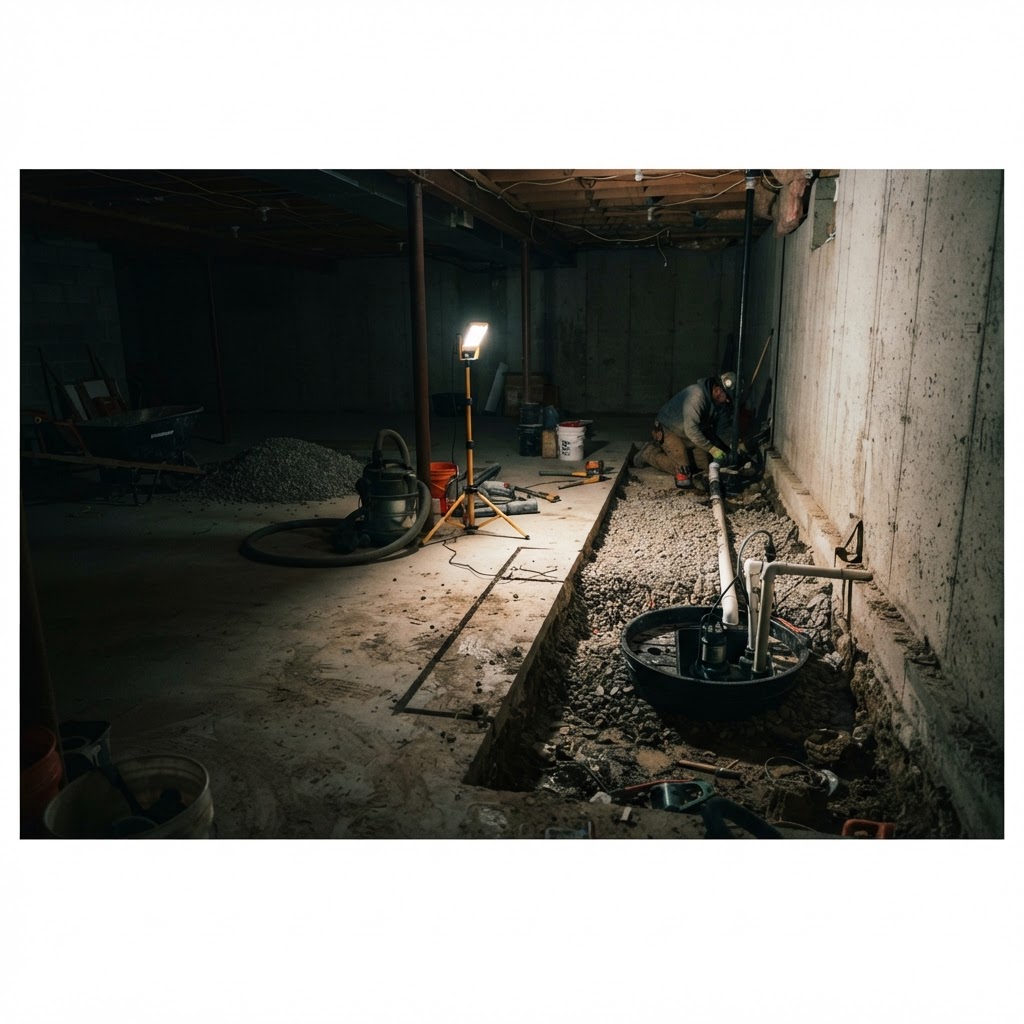
In clay country, waterproofing is really drainage. The soil around a Crown Point basement won't pass water quickly, so the goal is to give that water a faster way out than through your wall. There are two places to do it: inside the basement at the footing, or outside along the wall.
We'll forward your request to an independent Lake County contractor. (317) 798-0634.
Why Crown Point Basements Get Wet
Glacial clay till. Crown Point sits on the Valparaiso Moraine, a broad ridge of material bulldozed into place by the last glacier. Around town that mostly means dense, gray-brown clay till with scattered sand and gravel lenses. Clay sheds water slowly and swells when it's soaked. The disturbed backfill right around a basement is looser than the native clay, so rain collects there and sits against the wall like water in a clay pot.
A high seasonal water table on flat ground. Much of central Lake County is nearly level, and in wet seasons the shallow groundwater rises close to the surface. Newer subdivisions built on former farmland often rely on field tile, swales and retention ponds; when those are overloaded in spring, groundwater around foundations climbs too. Homes near wetlands, ponds and low drainage ditches feel it first.
Sandier ground to the south. Toward Cedar Lake and Lowell, the land slopes down toward the Kankakee basin and soils get sandier in places. Sand drains faster but can deliver water straight to the foundation, and the water table can run high near lakes and the old marsh country.
Freeze-thaw and lake-enhanced snow. Lake Michigan is close enough to load Lake County with heavy snow in some winters. Repeated freezing and thawing opens cracks, and fast melts on frozen ground push water sideways toward basements.
Big storms on flat lots. With little slope to carry it off, a summer downpour ponds near foundations and soaks in where it shouldn't.
Patterns Around Lake County
General tendencies only; each house needs its own inspection.
- Crown Point and Merrillville: block and poured basements in clay, cove-joint seepage after heavy rain, and builder sumps without perimeter drains.
- Winfield and St. John subdivisions: newer poured walls, finished basements, and the biggest risk being a pump that fails during an outage.
- Cedar Lake and Lowell: sandier pockets and higher groundwater near the lake and lowlands, with water rising through floors in spring.
- Schererville, Dyer and Munster: mixed ages of housing on flat ground where yard drainage and overloaded swales play a big role.
Signs You Need More Than a Dehumidifier
- Water along the floor-wall joint after rain or snowmelt
- Damp patches or efflorescence low on the walls
- Leaks through wall cracks or around pipes
- A builder sump that runs constantly, or a dry sump pit while the floor gets wet
- Musty odor, mildew on stored items or drywall
Inside: Perimeter Drain Tile and Sump
What it is
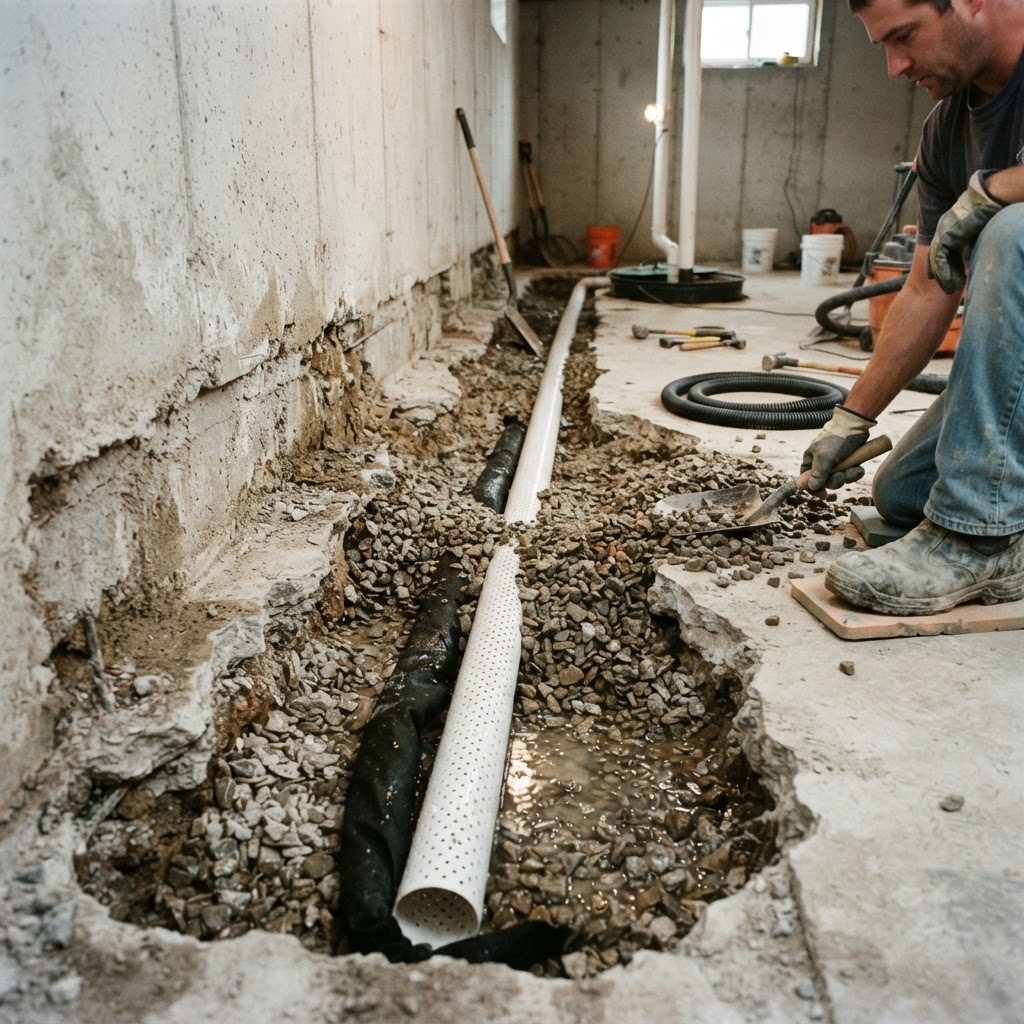
A drainage channel installed under the edge of the basement floor, beside the footing, that collects water seeping in at the wall base and routes it to a sump pump.
How it goes in
- Floor is cut and removed along the walls.
- A trench is excavated beside the footing.
- Perforated pipe or a drain channel is set in gravel.
- A wall-base flange or dimple membrane directs wall seepage into the system.
- Concrete is replaced and the sump pump discharges outdoors.
Why it's common in Crown Point
Clay backfill holds water at the base of the wall, where it pushes through the cove joint. An interior drain relieves that pressure directly. It also avoids digging up sod, patios and landscaping on a finished lot.
Things to ask
- Will the drain cover every wall or just the problem side?
- Where will the discharge go on a flat lot so it doesn't come right back?
- Is a backup pump included or optional?
Inside vs. Outside at a Glance
| Interior drain + sump | Exterior excavation | |
|---|---|---|
| Best for | Cove-joint seepage, groundwater rising under the slab | Water through the wall face, walls needing outside repair |
| Disruption | Basement floor edge, some dust | Yard, landscaping, patios along the dig |
| Clay soil impact | Avoids heavy digging outside | Slow digging; backfill with stone helps |
| Relies on | A working pump (backup recommended) | An outlet for the footing drain, usually a sump on flat lots |
| Typical cost | Lower | Higher |
Many Crown Point homes end up with an interior system because the water problem is hydrostatic pressure at the base of the wall, which interior drainage relieves directly. Exterior work earns its cost when the wall itself needs attention.
Additions, Crawl Spaces and Mixed Foundations
Plenty of Lake County homes have a basement under the original house and a crawl space or slab under an addition or family room. Water often finds the joint between them. A good plan treats the whole foundation: drain tile along the basement, a vapor barrier and drainage in the crawl (crawl space waterproofing), and sealing where the two meet.
Sump Pumps and Battery Backup
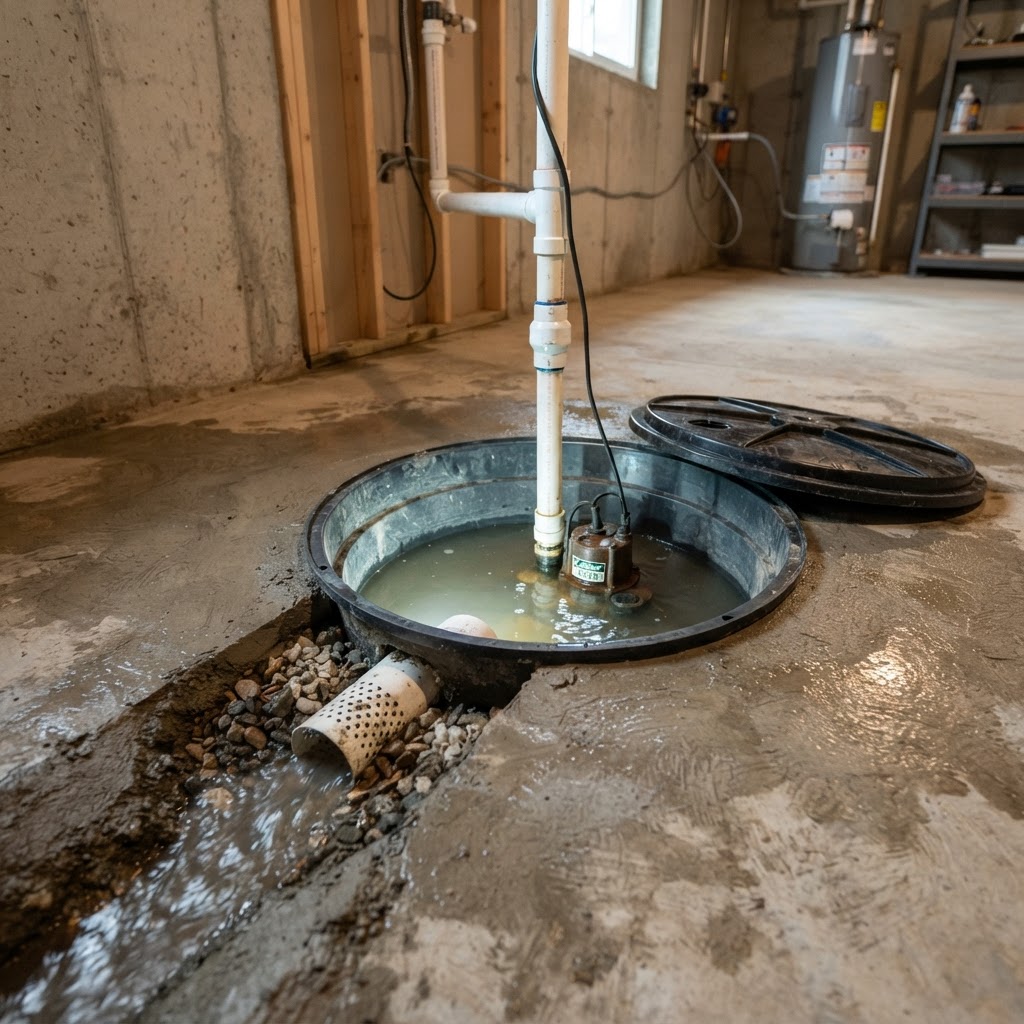
An interior drain is only as good as the pump at the end of it.
- Size to the inflow. Many homes are fine with a 1/3 or 1/2 horsepower submersible, but a pit that refills quickly in April may need more. A contractor can time the refill.
- Battery backup. Severe thunderstorms and ice storms bring outages right when the pit is filling. A second pump on a deep-cycle battery, or one driven by city water pressure if yours is strong enough, keeps the pit draining through an outage. See sump pump installation.
- Discharge on flat lots. Water pumped out onto level clay can soak right back to the wall. Lines should run well away from the house to a swale, drainage easement or approved outlet, never onto a neighbor's lot, and be protected against freezing.
- Sealed lid and alarm. A gasketed lid limits humidity and soil gas; a high-water alarm gives early warning.
Outside: Excavation and Membrane
What it is
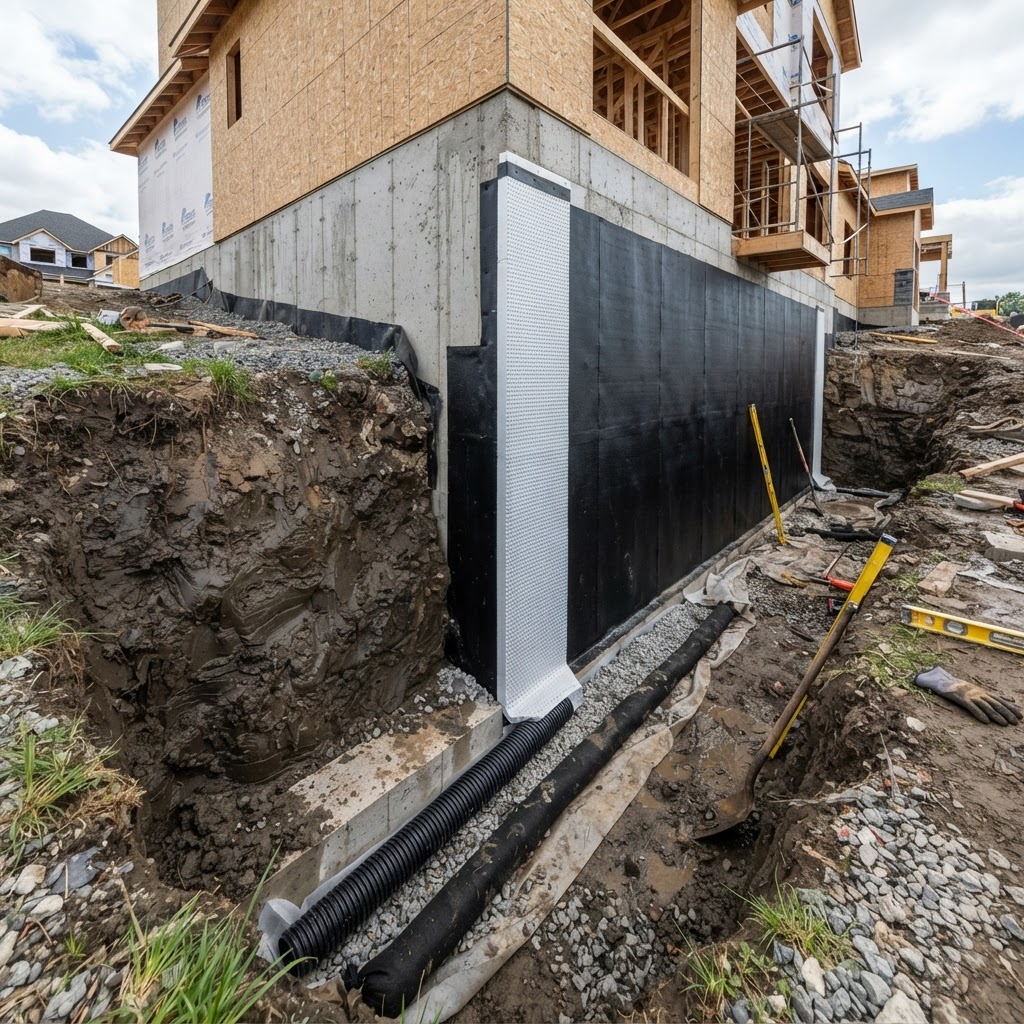
Digging down to the footing, cleaning and repairing the wall, applying a waterproof membrane and drainage board, and laying fresh perimeter pipe at the footing, then refilling the trench, ideally with gravel near the wall.
When it makes sense
- The wall needs structural work from the outside anyway.
- The finished basement should stay untouched.
- Water is coming through the wall face, not just the cove joint.
Clay-specific concerns
Heavy clay is hard digging and holds water in the trench. The backfill choice matters: replacing clay with stone near the wall improves drainage. The exterior drain still needs a place to go, which on flat ground usually means a sump.
Foundation Types Around Crown Point
- Concrete block in many 1950s–1980s homes around town and Merrillville. Water fills the hollow cores; weep holes into the bottom course plus perimeter drain tile let it out. Horizontal cracks mean soil pressure; see bowed wall repair.
- Poured concrete in most newer subdivisions toward Winfield, St. John and Cedar Lake. Leaks usually come through shrinkage cracks, form-tie holes and the cove joint. Isolated cracks usually suit injection; see foundation crack repair.
- Older homes near the square may have brick or stone below grade, which usually calls for an interior system with a wall membrane.
Don't Skip the Yard
On level Lake County lots, the cheapest big improvement is often outside:
- Downspouts extended or buried and run well away from the house
- Low spots near the wall built back up so soil falls away
- Clogged subdivision swales cleared (and HOA or town contacted if it's shared)
- Patios and walks that tilt toward the house corrected
The Process
- Inspection. Inside and outside: where water enters, foundation type, cracks or bowing, grading, gutters, sump condition.
- Written proposal. Linear feet, which walls, pump and backup specs, discharge route, crack repairs, finish removal, cleanup and warranty.
- Prep. Clear a few feet along the walls. Expect some dust and noise.
- Install. Interior systems usually wrap up in one to three working days; exterior work takes longer and depends on weather.
- Test. Water is run into the drain to prove it reaches the pit and leaves the house.
- Watch the first thaw. Spring is the real test in Lake County.
Warranty Expectations
Ask to read the warranty, not just hear about it. What's covered (drain, pump, labor, water entry), for how long, whether an annual service visit or fee is required, and whether it transfers to a buyer. Pump warranties typically come from the manufacturer and are shorter. Warranty terms come from the contractor; this site doesn't issue any.
Questions to Ask Before You Sign
- What evidence shows where the water gets in?
- Why interior, exterior or both for my house?
- Will the whole perimeter be covered or only the problem walls?
- Which pump, which backup, and where does the discharge go?
- Who pulls permits, and who handles cleanup and refinishing?
Costs from HomeGuide
Ranges below come from HomeGuide:
- Exterior (dig-out) waterproofing: $10,000 to $18,000
- Interior waterproofing overall: $6,000 to $12,000
- Inside French drain systems: $4,000 to $17,000
- Yard regrading: $1,000 to $5,000
- Outside drain line: $30 to $90 per linear foot
These national averages aren't quotes for your home. For a fuller breakdown, see Crown Point waterproofing costs.
Finishing the Basement Afterward
If the goal is a family room or bedroom, put the drain system and wall membrane in first, keep the sump accessible behind a removable panel, choose moisture-tolerant flooring and wall materials, and plan for a dehumidifier. Bedrooms need code-compliant egress windows with drained wells.
Selling or Buying
Indiana sellers have to disclose basement water problems they know about, so keep invoices and warranty-transfer forms with your closing documents. If you're buying, a freshly painted lower wall or an undocumented new sump deserves a follow-up question and possibly a waterproofing inspection.
Radon and Insurance
An open sump pit lets soil gas into the house; a sealed lid helps, and radon mitigation can be added by a qualified radon contractor. Standard homeowners policies usually don't cover waterproofing or gradual seepage, and sump failure often requires a water backup rider. Check your policy.
Before the Next Storm
Clean gutters, confirm downspouts are attached and extended, test the sump by pouring water into the pit, check the backup battery, and move stored items off the floor.
Permits
Exterior excavation and drainage tie-ins may require a permit from the City of Crown Point or Lake County depending on location. Get the contractor to verify before digging.
Interior Drainage vs Exterior Excavation
There are two main approaches, and many basements use parts of both.
| Interior drainage | Exterior waterproofing | |
|---|---|---|
| How it works | Drain tile inside the footing perimeter collects water and sends it to a sump pump | Excavate outside, apply membrane or coating to the wall, install drain tile at the footing |
| Stops water from | Reaching the living space (manages it) | Entering the wall (blocks it) |
| Disruption | Inside the basement; edge of floor is broken and repoured | Yard, landscaping, walks and decks along the wall |
| Typical cost | Usually less than full excavation | Usually more, due to digging |
| Good for | Most leaks at the floor joint, high groundwater | Wall leaks, new construction, walls needing repair from outside |
As general guidance, interior systems are the most common fix for existing homes, and exterior work makes sense when walls themselves must be repaired or sealed from outside. Costs vary; get a free quote by calling (317) 798-0634.
Exterior excavation in Crown Point: in heavy Lake County clay, digging down to the footing lets the contractor clean and seal the wall, install drain tile and backfill with stone, and repair bowed walls at the same time. It is the most disruptive approach (decks, walks and landscaping may need to come up), so it's usually chosen when walls need work from outside.
Frequently Asked Questions
Give the water somewhere better to go.
Call (317) 798-0634.